


The Trust economy: Part 2


People still trust people more than brands.
In Part 1 (5 January 2026) we explored how trust hasquietly become the most valuable currency in today’s marketing and salesprocess. With UK consumers researching more, questioning more and abandoning brands faster than ever when credibility slips, digital content has taken on a new role. It’s no longer just promotional(to stimulate awareness and interest), it needs to seal the deal.
When buyers can’t walk into a shop or office to speak toa salesperson your online presence must do that job instead. And in a worldwhere AI-generated content and algorithm-driven messaging are everywhere, quick-fix,one-size-fits-all marketing is no longer enough.
It’s 2026 and customers and clients are more sceptical than ever. The line between what is real and what is artificial has become almost invisible. Even to the trained eye and with a questioning mind it’s hard to tell where reality ends and the algorithm begins.
And with digital content now carrying the weight oftrust, what kind of content earns it? The answer is surprisingly simple. Peoplestill trust people more than brands.
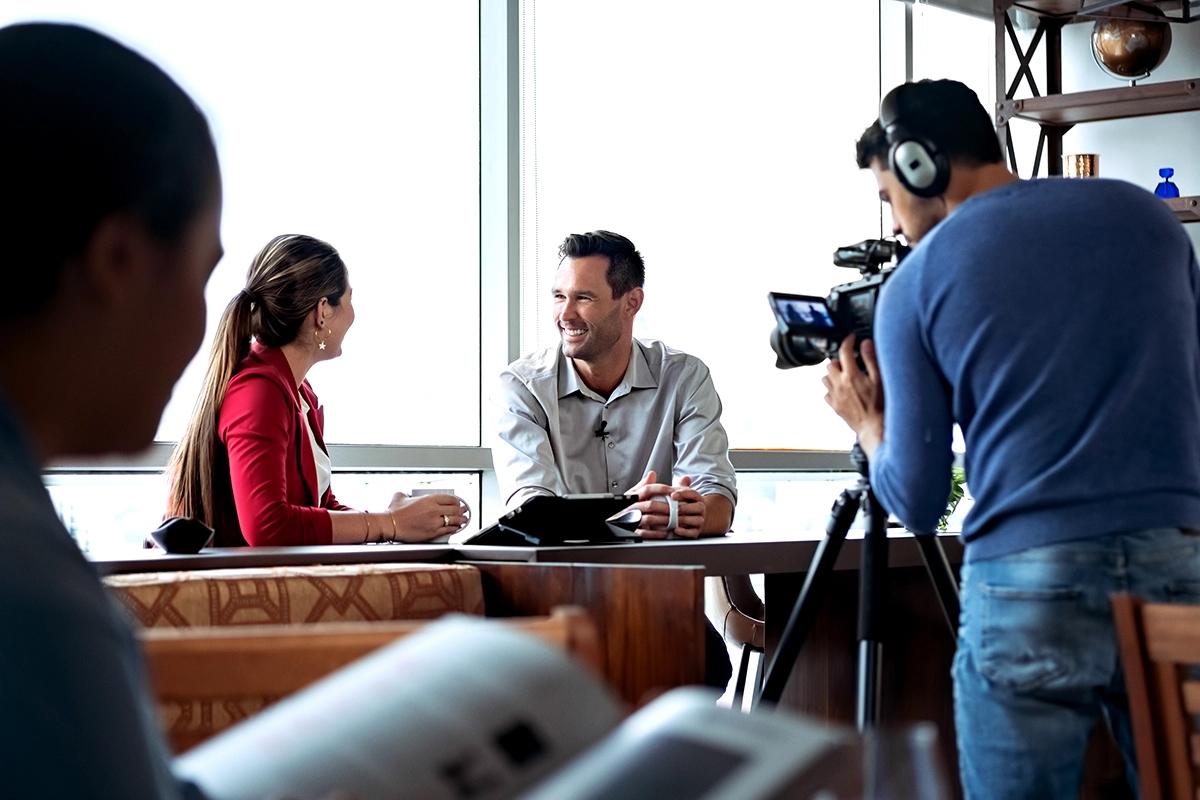
And we have seen this many times over with clients from a variety of sectors. First-hand, straight-from-the-source video testimonials stop feeling like ‘nice to have’ and become critically valuable. Real people on camera, sharing real-world experiences of companies, products and services in their own words.
And it’s important to widen the lens here. Testimonials aren’t just customers talking about a product or service. They also include team members sharing what it’s genuinely like to work inside the business. Staff advocacy and recruitment testimonials have become just as powerful , because in a trust-fragile market,candidates research employers in exactly the same way buyers research brands. Giving potential hires an unfiltered view of culture, leadership and day-to-day reality has been very powerful for our clients.
Noscripting, no AI-written reviews, no bot-generated ‘likes’ , one-dimensional Trustpilotscores or highly moderated Glassdoor reviews.
That’s why video testimonials remain one of the most powerful tools in online marketing, and why they now out perform almost every other content format for conversion.
1. Social proof works because it feels real
Unlike scripted brand videos, testimonials are perceived as unfiltered, relatableand human.
When a real customer, or real staff member. explains their experience in theirown words, it bypasses traditional marketing defences.
Viewers aren’t being sold to, they’re being reassured.
2. Why video beats written reviews
Text reviewsare easy to fake, moderate and manipulate. Companies and third-party agenciesare actively paying for, or incentivising, positive online reviews
Video is much harder to fabricate convincingly.Video testimonials captures facial expressions, tone of voice, body language and real environments - human signals that instil trust
Video testimonials operate as trust infrastructure across both the sales and recruitment journey. At the awareness stage, they establish immediate credibility. During consideration, they lower perceived risk and answer unspoken doubts. At conversion, they provide the reassurance that turns hesitation into action, whether that’s a purchase, an enquiry or a job application. And after the decision is made, they reinforce confidence in that choice, strengthening loyalty, retention and long-term advocacy.
Trust builds the sale and sustains the relationship. We’ve seen how a well-placed testimonial video (or suite of testimonial) on a landing page or social postcan increase conversion dramatically , especially for service-based businesses.
The Edelman TrustBarometer 2025 reveals that Ecommerce sites withoutclear trust cues see up to 50% checkout drop-offs, while B2B leads linger in doubtwithout social proof.
As buyers ofproducts, services, subscriptions, investments and solutions, we juggle endless options, so uncertainty is the ultimate sales blocker. Transparency and real testimonials make customers feel safe, not sold to and go a long way to pushpurchasing decisions or legitimate sales enquiries over the line.
See two strong examples here donefor a service business (MGM) and recruitment (TN Recs) – contact us to explore how wecan bring your Google reviews, customer feedback, advocacy stories andreferrals to life with video.
BOOK A TESTIMONIAL SHOOT
In the TheTrust Economy Part 3 (final) blog we dive deeper into what good looks like whencreating video testimonials.
Related Articles




zoomfilms
AGENCY

